

Neurodivergent: It’s A Learning Difference Not A Disability
A Good Time to Reflect on Common Misconceptions Regarding Those With Neurodivergent Differences

This week, someone in a position of political power, used his platform, not for positive political discourse, but to try to belittle someone with a learning difference. He has done this before: making fun of people with differences and disabilities. Those of us familiar with neurodivergent differences hear these despicable comments and feel a renewed sense of anger and frustration because of the complete lack of understanding and meanness of the comments. I have decided to devote this article to (in some small way) help dispel some of these falsehoods and misconceptions.
When I discuss neurodivergent differences, I am referring to a broad category of issues that can be seen in 15 to 20% of the population. Neurodivergent means that someone’s brain may process information differently. Many people know of the more common differences such as dyslexia, ADHD, and autism. In the US about one in five children has a learning or thinking difference such as ADHD or dyslexia. Dyslexia affects approximately 10% to 20% of the population and is the most common learning difference as it represents about 80% of all learning disabilities (as an aside, I hesitate to use the word disability as I believe it truly is a difference that is only a problem if it is not taught commence it to the needs of the individual). ADHD affects approximately 5% to 10% of the population and in the US about 11% of children have been diagnosed with ADHD. Autism worldwide has a prevalence of approximately 1.5% to 3% of the population. In the US, recent estimates suggest that 1 in 31 children are identified as having autism. And often with these differences, there is what is called a comorbidity, meaning that people may have more than one neurodivergent difference, with estimates between 30% and 50% of the population with a difference, has a comorbidity.
The biggest misconception about neurodivergent differences is that someone with one or more of these disabilities has a lower IQ. This is the furthest thing from the truth! People with dyslexia, ADHD, or autism can have any level of intelligence, while many have a superior or gifted IQ. If a child is not given the proper education for their neurodivergent difference, then they will not be able to learn in the the way they need to. Without the proper education, the educators may see a student’s school performance as potentially subpar. This may be why people think there is a lack of intelligence, when that is not true. Every mind needs to be unlocked to find the best way to be taught and to learn. Children may be labeled as lazy or be told that they are not trying hard enough, and they may begin to believe that, which is a disservice not only to them, but to their community, and possibly even the world.
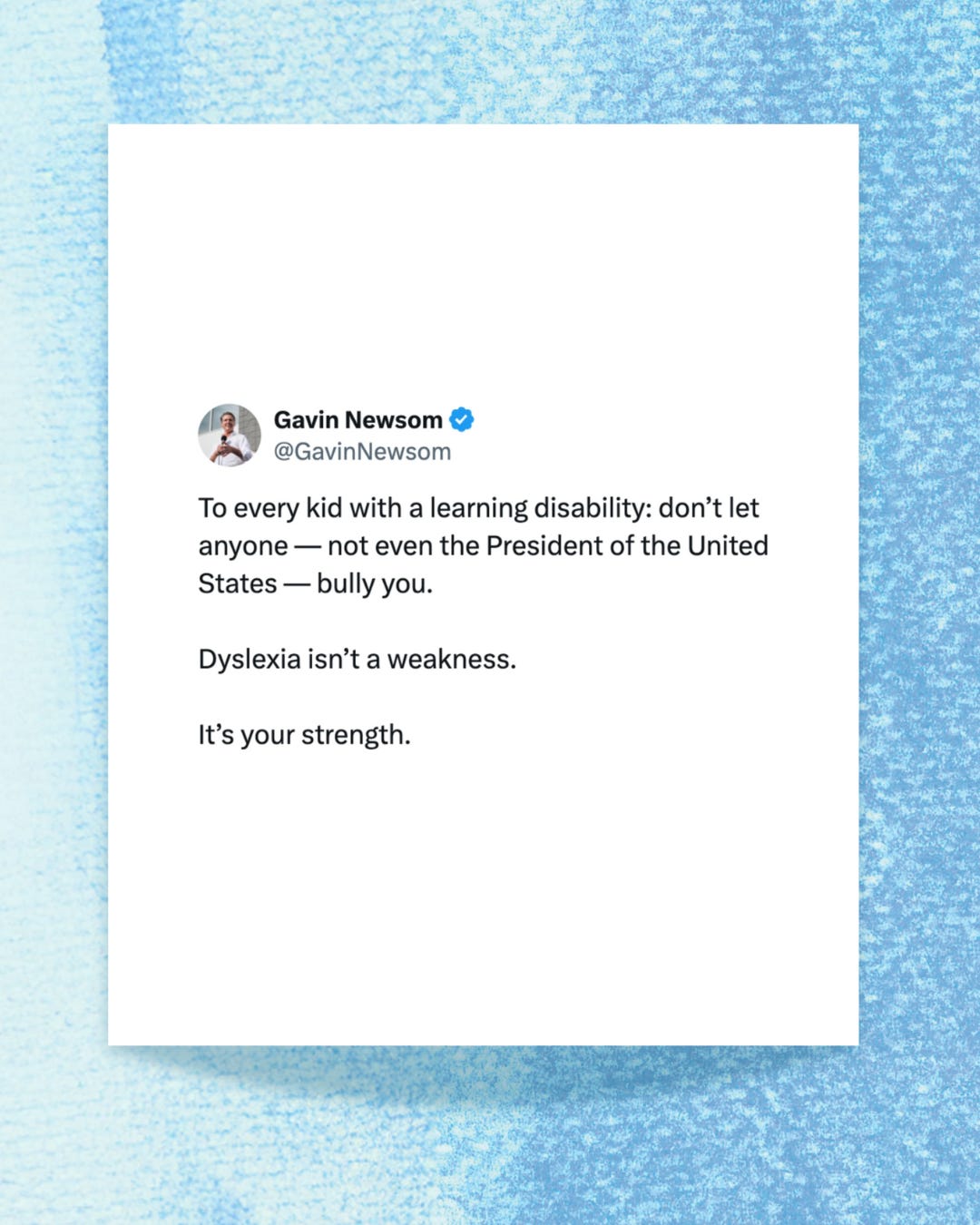
Throughout history, there have been innovators, entrepreneurs, scientists, and artists who have a learning difference and have excelled and brought great things to the world. Some examples of famous people with dyslexia are Albert Einstein, Richard Branson, Steven Spielberg, Whoopi Goldberg, Anderson Cooper, Keira Knightley and Henry Winkler, to name a few. And most recently, Gavin Newsom, the governor of California made public his struggles with his dyslexia. It took courage for him to speak out, because often people with a neurodivergent difference are made to feel “less than,” and therefore they may feel the need to hide their “disability.” It took great courage for him to be honest. And unfortunately, we see that this courage and desire to be honest, did indeed lead someone to call him out, quite wrongly, as someone who is “less than.” This meanness is unfortunately how many ignorant people treat others. It is so important for people like Gavin Newsom, and all the people with a platform who are also in the neurodivergent community, to use their voices to speak out. The more people in the public eye that speak out and show their amazing worth and value, the more the population with a difference will feel important and seen and heard, as they should be!
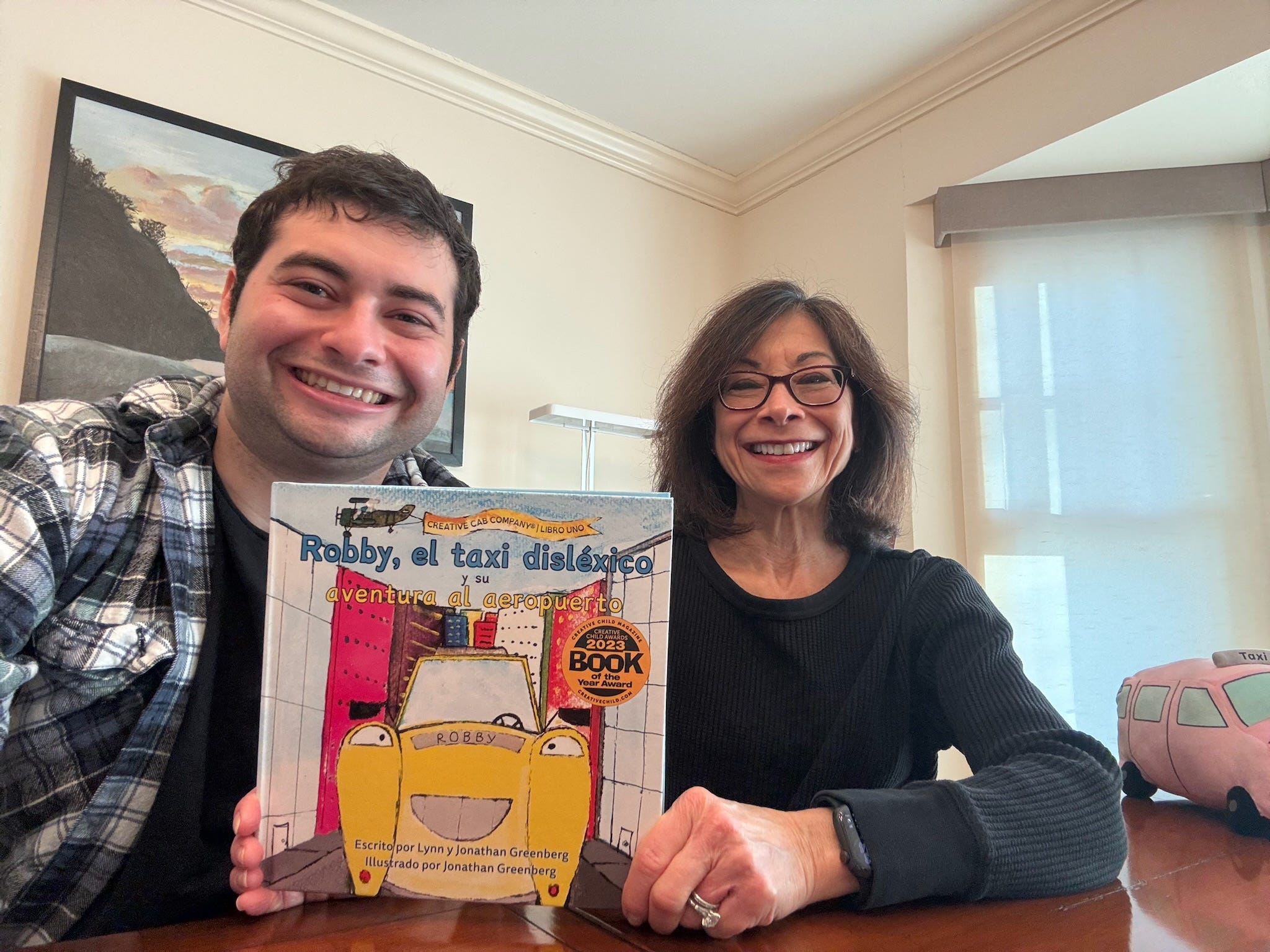
This is what led Jon and I to write stories under the Creative Cab Company banner about children with neurodivergent issues. Our first book, Robby the Dyslexic Taxi and the Airport Adventure and the second, Suzy the ADHD Taxi and the Sightseeing Adventure, with more stories to come. We wanted children with neurodivergent differences to see themselves in stories, and for those who were trying to understand these differences, to help them be advocates and allies. Nobody should feel less than for being different! Jon and I, and our family and everyone else at the Creative Cab Company, see these differences as superpowers. How boring the world would be if everyone was the same! Instead of being negative and unpleasant and mean spirited, we should hold each other up as unique and special, because we are. I was always taught if you don’t have something nice to say, than don’t say anything at all! And I believe that this is more true today, then ever before, because the world is too mean spirited and unkind. So thank you to Governor Newsom and to every other person who has spoken out about their neurodivergent differences, as it will help shed light on a group of people who should be celebrated for unique and wonderful spirits.
There’s always something interesting to learn when reading these articles.